
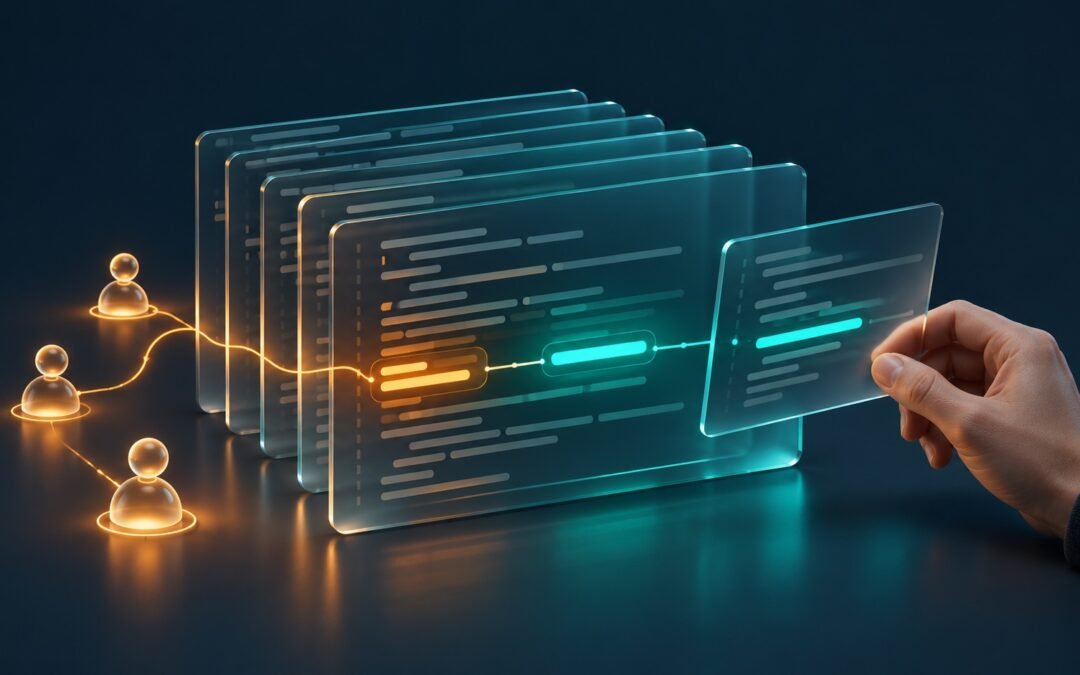
OpenAI Daybreak is expanding from access to advanced security models into a more connected workflow for testing applications and preparing fixes. Announced on 12 November 2026, Daybreak Red Team and Daybreak Defense Factory target a familiar bottleneck: finding a weakness is only useful if someone can verify it and safely repair the software.
For developers and businesses, the important distinction is between AI-assisted investigation and autonomous deployment. OpenAI says agents can investigate vulnerabilities and develop patches, but engineers still review and test proposed changes before merge.
Background: why another security tool matters
Security teams already juggle code scanners, dependency alerts, bug-bounty submissions and incident reports. These tools can identify potential problems, but an alert does not automatically establish that a weakness is reachable in a particular application.
Someone must inspect the surrounding code, understand existing controls, reproduce the issue where appropriate and decide whether the proposed fix breaks anything else. Daybreak’s product direction is to connect more of those steps, rather than simply generate another list of warnings.
What changed with OpenAI Daybreak?
Daybreak Red Team tests web applications
OpenAI describes Daybreak Red Team as AI penetration testing for web applications. Coordinated agents use source code and application context to investigate attack paths, validate reported vulnerabilities and check whether a patch prevents the demonstrated exploit.
The product can work with findings from scanners, bug-bounty programmes and disclosure reports. OpenAI’s product description also specifies isolated environments and Guardian review to enforce assessment scope and control which applications and endpoints agents can reach.
The Register reported that Red Team launched in early access. That matters: a product announcement should not be read as unrestricted availability or permission to test arbitrary websites.
Defense Factory turns findings into proposed fixes
Daybreak Defense Factory covers the remediation side. Agents trace vulnerabilities through code and prepare patches for engineers to inspect. Findings can come from existing security tools or Daybreak Red Team, and developers can work with Codex to examine evidence and refine a change.
OpenAI’s developer guide describes Defense Factory as a research preview. Teams connect a GitHub repository and choose a one-off repository scan or ongoing commit monitoring. Larger repositories may take several hours to scan.
The guide also describes regression tests that fail before a fix and pass afterwards when feasible. If a reliable test cannot safely be created, the workflow should record what remains unverified. That qualification is more useful than assuming every generated patch arrives with conclusive proof.
Why this matters for developers and businesses
The potential benefit is a shorter path from a credible report to a reviewable change. Instead of manually rebuilding context for each alert, a team could receive an investigation tied to relevant code paths, a suggested patch and supporting validation.
There is also a practical argument for keeping existing scanners. OpenAI’s guide positions Codex Security as complementary to deterministic scanning, not a reason to remove it. Different tools can catch different failure modes, and independent checks are valuable when the proposed repair comes from an AI agent.
Sonar provides one example. Its 12 November announcement says SonarQube findings can feed into Daybreak Defense Factory, while SonarQube independently checks changed code against the organisation’s quality gate. The company says organisations retain control over review and merge policies.
A practical evaluation plan
Start with one owned application
For an Australian startup or software team, a sensible trial would begin with a service it owns and is authorised to assess. Document the application boundary, permitted actions and responsible reviewer before connecting any repository or running a test.
A useful pilot should measure outcomes rather than alert volume:
- Validity: how many findings survive an engineer’s evidence review?
- Repair quality: does the patch address the underlying issue without changing unrelated behaviour?
- Review effort: how much time is needed to understand, test and approve each proposal?
- Coverage: what was examined, skipped or left unverified?
- Operational cost: what are the scan duration, usage limits and charges for that workload?
Keep findings private, preserve the original evidence and require existing tests and security gates to pass. A small trial makes it easier to distinguish genuine productivity improvements from extra review work.
Check access and data handling separately
Do not assume a ChatGPT subscription unlocks every Daybreak capability. OpenAI’s guide distinguishes ordinary defensive workflows from separately approved advanced cyber activities, and advises checking the identity, workspace, model and product surface involved.
Australian organisations should also review contractual data handling, repository access, retention and any relevant privacy obligations before sharing source code or reports. The sources reviewed here do not establish an Australia-specific hosting arrangement.
Risks and limitations
AI-generated findings can be mistaken, incomplete or difficult to reproduce. A patch that stops one demonstrated exploit can still introduce a regression or leave a related path open. Neither an impressive demonstration nor a clean scan proves that an application is secure.
Permissions deserve particular attention. OpenAI warns that local Codex Security CLI scans use operating-system permissions and do not pause for approval. Teams evaluating that adjacent workflow should remove unrelated credentials from the environment and protect reports containing source excerpts or vulnerability details.
More broadly, use isolated test environments where appropriate, least-privilege access and explicit authorisation. These controls remain necessary even when a vendor describes built-in safeguards. Human reviewers should retain responsibility for consequential changes.
What to watch next
Watch for broader access, clearer commercial terms and independent evaluations on realistic applications. Useful evidence would include false-positive rates, missed vulnerabilities, regression rates and the engineering time needed to land safe fixes.
It will also matter whether integrations preserve a clear audit trail from original finding through investigation, reviewed patch and verification. That record is essential when a team must explain why it trusted a repair.
Conclusion
OpenAI Daybreak’s new products offer a promising way to connect application testing with vulnerability remediation. The sensible approach is a tightly scoped pilot, independent checks and human-approved patches—not treating AI agents as a substitute for security fundamentals.
Sources
- OpenAI — Daybreak Red Team.
- OpenAI — Daybreak Defense Factory.
- OpenAI Developers — Scaling cyber defenders with Daybreak.
- Sonar — Sonar brings vulnerability intelligence to OpenAI Daybreak Defense Factory.
- The Register — Reporting on the Daybreak security product launch.