
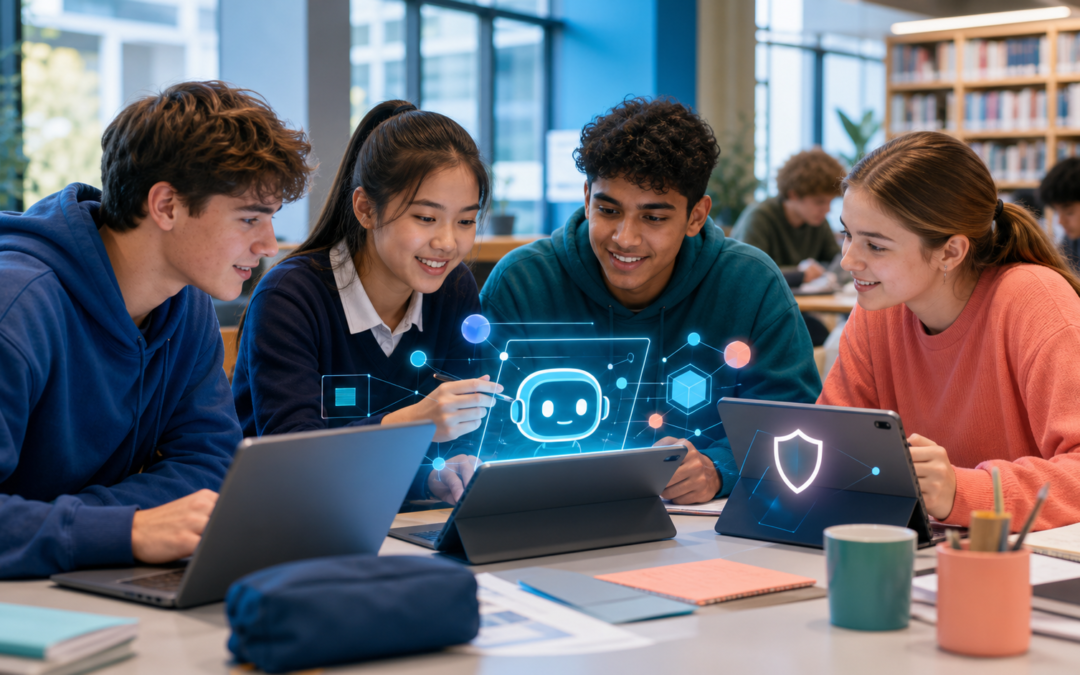
OpenAI has started rolling out ChatGPT for Teens, a version of its chatbot designed for users aged 13 to 17. The release combines stronger content safeguards with guided learning features, more frequent healthy-use prompts and optional controls for parents.
The launch matters because teenagers are already using generative AI for homework, research, creativity and personal questions. A separate teen experience may give families and schools a clearer framework, but it does not remove the need for human judgement, privacy awareness or independent fact-checking.
What is ChatGPT for Teens?
ChatGPT for Teens is an age-tailored experience rather than a completely separate app. OpenAI says accounts identified as belonging to users under 18 are placed into the teen version automatically. The company uses both a user’s stated age and age-assurance signals to decide which experience applies.
The product is intended to keep ChatGPT useful while changing how it responds in areas where younger users may be more vulnerable. It is also designed to behave more like a learning tool and less like an emotional companion.
What changed in the teen experience?
Stronger content protections
The teen version applies tighter handling around suicide and self-harm, disordered eating, violence, dangerous activities, substances, age-restricted goods and explicit sexual content. OpenAI also says the chatbot should not use romantic language with a teen, encourage emotional dependence, or claim that it is conscious or has feelings.
These boundaries are important because conversational AI can sound confident, empathetic and personal even though it does not understand a user in the human sense. The aim is to reduce responses that could blur that distinction for younger people.
Study Mode and healthier homework support
Learning is a major part of the release. Study Mode is designed to guide a student through a problem using questions, explanation and recall instead of immediately producing a finished answer. “Study Hours” can make that guided approach the default during scheduled periods, while homework reminders may redirect requests that appear to be seeking a shortcut.
This will not prevent every misuse. A determined student may still use another tool or rephrase a prompt. However, making the learning-oriented path easier could help teachers and families reinforce that AI should support thinking rather than replace it.
Parental controls and safety notifications
Parents and guardians can link their account to a teen’s account if both sides opt in. Linked adults can configure quiet hours and study hours, manage some content and data settings, and receive notifications in limited higher-risk situations. OpenAI has added eating-disorder-related alerts alongside existing safety notifications.
Parents do not receive full conversation transcripts. That distinction attempts to preserve some teen privacy while providing enough information to encourage offline support when the system identifies a serious concern.
How age assurance works
OpenAI does not rely only on the date of birth entered at signup. Reporting from iTWire says its age-prediction system may consider account signals such as conversation topics, usage timing and account history. If the system is uncertain, it can default an account to the under-18 experience.
That cautious default may protect minors, but it can also classify some adults incorrectly. Adults who are placed into the teen experience may need to verify their age through a third-party process. This creates a real trade-off: age assurance can improve safety, yet the behavioural analysis and identity checks involved also raise privacy and data-handling questions.
Why this matters in Australia
Australian availability is expected by 8 September 2026, according to iTWire. The timing is significant as Australia strengthens age-assurance expectations for online services, including generative AI systems that may expose young people to high-impact or adult content.
Teen AI use is already mainstream. Australian families and schools therefore need practical policies now—not only after a harmful incident. Those policies should cover when AI is appropriate, what information must never be shared, how generated claims should be checked and when a student should speak with a trusted adult instead.
Practical impact for families, schools and students
- Families: Review linked-account settings together and explain what notifications can and cannot detect. Keep conversations about difficult topics open rather than treating software controls as complete supervision.
- Schools: Define acceptable AI assistance for each task. Guided study can be useful, but assessment rules should distinguish brainstorming, feedback and research from submitting AI-generated work.
- Students: Use AI to ask for explanations, quizzes, examples and feedback. Verify facts with trusted sources and never share passwords, identity documents, private health details or another person’s confidential information in a chat.
- Developers and education providers: Watch OpenAI’s under-18 system evaluations and test age-appropriate workflows rather than assuming the standard product is suitable for every learner.
Risks and limitations
Safety filters can miss dangerous content or block harmless educational discussions. Age prediction can be wrong. AI-generated explanations can still contain fabricated facts, weak sources or biased framing. Safety alerts may also create false confidence: they are not a substitute for emergency services, qualified mental-health care, teachers or trusted family support.
There is also limited public evidence so far about whether the new study features improve long-term learning outcomes. The design is promising, but independent evaluation will be needed to determine how it performs across different ages, cultures, abilities and classroom settings.
What to watch next
The next tests will be the accuracy and fairness of age assurance, the rate of false safety alerts, and whether teens can easily bypass restrictions. Schools will also want evidence that Study Mode supports genuine understanding rather than simply changing the style of AI-assisted answers.
OpenAI has begun including under-18 evaluations in system documentation. More transparent reporting—especially country-specific rollout details, privacy safeguards and real-world learning research—would help families and educators judge the product on outcomes rather than promises.
Conclusion
ChatGPT for Teens is a meaningful attempt to adapt a general-purpose AI assistant for younger users. Its stronger boundaries, guided learning features and optional parental controls address genuine concerns without removing access altogether. Still, no automated safeguard can make AI risk-free. The best results will come when product protections are combined with digital literacy, clear school rules and trusted adults who remain actively involved.