
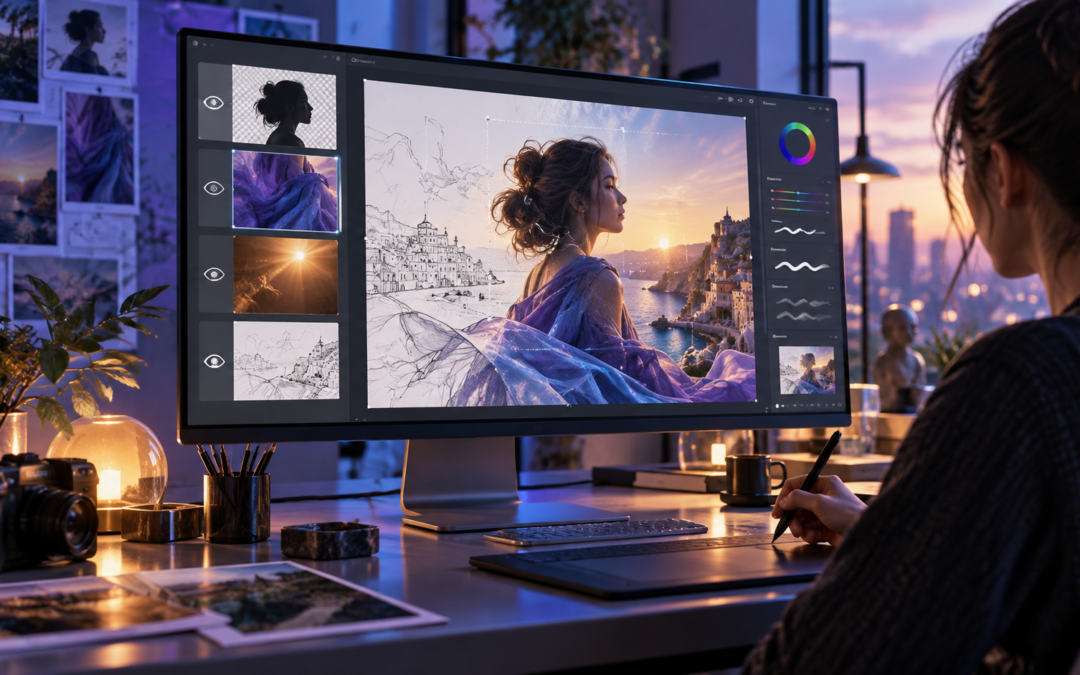
OpenAI has released ChatGPT Images 2.5, a major update aimed at making AI image generation faster, more controllable and more useful for real creative work. The release improves visual quality and multi-step editing while adding tools such as Sketch, image comments and reusable templates.
For developers, OpenAI has also introduced two API models: GPT-Image-2.5 Flare for most applications and GPT-Image-2.5 Sunburst for premium workflows that need tighter editing control. Here is what changed, who benefits and where caution is still needed.
What is ChatGPT Images 2.5?
ChatGPT Images is OpenAI’s image creation and editing experience inside ChatGPT. Instead of using a traditional graphics application, people can describe an image in natural language, upload a reference, request changes and continue refining the result through conversation.
Images 2.5 builds on that workflow rather than simply chasing sharper output. OpenAI says the model produces more natural lighting and richer textures, preserves subjects from reference photos more accurately and follows editing instructions more reliably over multiple turns. Those changes address a familiar problem with generative image tools: a small edit can unexpectedly alter a face, product, background or other detail the user wanted to keep.
What changed in ChatGPT Images 2.5?
Faster image generation
OpenAI says it has reduced image-generation latency by up to 50% compared with Images 2.0. Actual speed will vary with the request and service conditions, but lower latency matters because creative work is iterative. A shorter wait between a prompt, review and revision can make the tool feel less like a batch generator and more like an interactive editor.
Better reference-image consistency and editing
The update focuses on preserving recognisable subjects and following instructions across several editing rounds. This could help creators maintain a consistent person, pet, product or visual composition while changing selected elements. OpenAI also says the model improves natural lighting and texture, which should be useful for product mock-ups, concept visuals and stylised photo edits.
Users can now place comments directly on an image to target a change. That provides a more precise alternative to writing a long prompt explaining which object or area needs attention. It should reduce ambiguity when, for example, changing one item without rebuilding the full scene.
Sketch and templates
A new Sketch feature lets users draw a rough visual guide inside ChatGPT and turn it into a completed image. OpenAI suggests uses ranging from room layouts and fashion concepts to simple doodles. The important idea is spatial control: a rough line drawing can communicate position and composition more clearly than text alone.
Templates offer quicker starting points for common formats, including flyers and product photography. Users can also share prompts so other people can apply an idea to their own images. Together, these additions move the product closer to a guided creative workspace rather than a blank prompt box.
Two new GPT-Image API models for developers
OpenAI is making Images 2.5 available through two API options. GPT-Image-2.5 Flare is described as the default for most applications, bringing the new quality and editing improvements with 50% lower latency than GPT-Image-2. OpenAI positions GPT-Image-2.5 Sunburst for premium visual workflows that need tighter control across edits.
This split gives developers a clearer choice between a general production model and an option for more demanding creative tasks. Before switching a live application, teams should test both against their own prompts, reference images, response-time targets and cost limits rather than relying on launch examples alone.
Why the update matters
AI image tools are most valuable when they can handle revision, not just generate an impressive first draft. Marketing teams may need a product to remain unchanged across campaign variations. Designers may want to alter a background without losing the original composition. Online sellers may need several consistent visual treatments, while developers need predictable behaviour for automated workflows.
Better preservation and targeted comments can reduce rejected outputs and manual clean-up. Faster generation may also make live ideation more practical in client sessions, classrooms or collaborative design reviews. Meanwhile, sketches provide an accessible bridge for people who know what they want spatially but do not have advanced drawing skills.
Practical impact for users, businesses and creators
- Everyday users: quicker experiments and easier local edits without repeatedly rewriting a prompt.
- Creators and designers: more control over layout, subject identity and iterative visual development.
- Businesses: faster mock-ups for products, campaigns and presentations, with the potential for greater consistency.
- Developers: API choices for high-volume applications or workflows where editing precision is more important.
OpenAI says Images 2.5 is rolling out to ChatGPT, ChatGPT Work and Codex users across all tiers on desktop, mobile and web. Flare and Sunburst are available through the API. Availability can still vary during a rollout, so users should check their product or developer console.
Risks, limitations and concerns
Improved image fidelity does not eliminate common generative-AI risks. Outputs can still contain incorrect details, inconsistent text or unwanted changes. Users should carefully review images before using them in advertising, news, health, legal or other high-stakes contexts.
Copyright, consent and privacy also remain important. Do not upload confidential material or another person’s likeness without permission, and verify that generated assets are suitable for the intended commercial use. Businesses should retain human review, document approved sources and clearly label synthetic media where context requires it. More capable editing also makes deceptive imagery easier to produce, increasing the need for provenance and responsible publishing practices.
What to watch next
The most useful evidence will come from independent testing: how consistently Images 2.5 preserves people and products, whether comment-based edits isolate the requested area, and how Flare compares with Sunburst in latency, quality and operating cost. Integrations into design, ecommerce and content-management tools will also show whether the API can support repeatable production workflows.
Conclusion
ChatGPT Images 2.5 is a practical update centred on faster iteration and better control. Its combination of improved subject preservation, targeted comments, sketches, templates and two developer models could make AI imagery more useful beyond one-off experiments. The gains are promising, but professional users should validate consistency, rights and accuracy before putting generated visuals into production.